



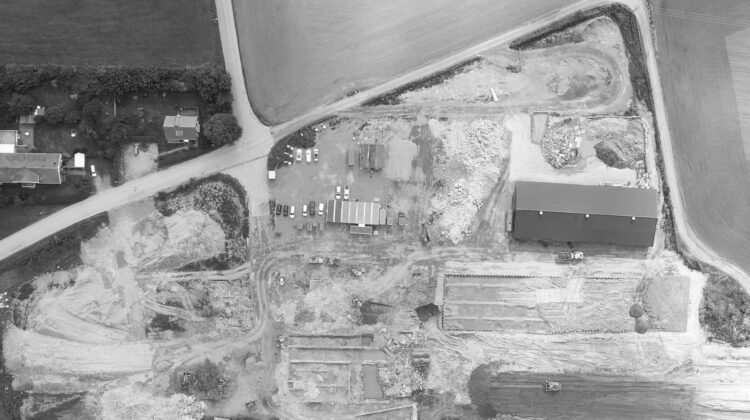
The most consequential breakthroughs in environmental remediation rarely begin in a laboratory. They begin in a muddy field, with a team of engineers and technicians staring at data that doesn’t behave the way the textbook said it would.
The tension between what the science predicts and what a contaminated site does is where genuine innovation lives — a dynamic quietly shaping how environmental engineers now address some of the most stubborn problems, including PFAS contamination.
When the Site Becomes the Laboratory
PFAS (per- and polyfluoroalkyl substances) have earned the nickname “forever chemicals” for good reason. Their carbon-fluorine bonds are among the strongest in organic chemistry, making them extraordinarily resistant to the biological and thermal degradation that breaks down most contaminants. For decades, the standard industry response amounted to containment and management rather than true remediation.
The teams working at the intersection of biological and thermal treatment approaches didn’t set out to solve PFAS specifically. They were doing something more fundamental: running small-scale field trials based on deep field expertise, measuring what worked, what didn’t, and why. That unglamorous methodology turns out to be exactly what a problem like PFAS demands.
Lessons from the Ground Up
Practitioner knowledge accumulated over years of field work rarely makes it into published literature. Peer-reviewed journals tend to capture “the success,” but what should be remembered is how real-world implementers produced that outcome.
The development of BAM — Bioavailable Absorbent Media — is a case study in iterative discovery. BAM is a proprietary carbon-based product derived from pyrolyzed, recycled organic biomass. Its defining characteristic is a dense honeycomb pore structure with openings of varying sizes. That geometry draws contaminants in and holds them within the pores rather than allowing surface biofilm to accumulate, which means the material keeps absorbing rather than saturating and stalling. The pore architecture also creates an ideal habitat for microbial colonization that can access and degrade sequestered contaminants.
In early field deployments targeting petroleum hydrocarbons, the BAM-plus-microorganism combination consistently outperformed nutrient-only approaches, with pilot data showing non-detect contaminant levels within weeks of injection. The more significant discovery came when the team began working at sites with complex contaminant profiles — including PFAS — near tree root systems.
The rhizosphere proved to be an unexpectedly productive environment. Roots continuously exude sugars and organic acids that sustain large, diverse microbial populations. When BAM was introduced alongside targeted microbial consortia, a co-metabolism effect emerged beyond what the treatment was designed to achieve. Microorganisms metabolizing one contaminant class were inadvertently — and beneficially — influencing the transformation of others. At one site, this dynamic produced PFAS reductions exceeding 90%. The result was eventually patented, not because anyone had planned to invent something new, but because the field data was too compelling to ignore.
That foundational work — understanding how a carbon-based substrate could act simultaneously as a sorption medium, a microbial habitat, and a catalyst for co-metabolic reactions — proved to be the conceptual bridge to PFAS treatment. In environmental remediation, the site teaches you things the lab cannot.
The Role of Thermal Treatment
Biological approaches are powerful, but they have limits. Temperature, soil permeability, contaminant concentration, and subsurface chemistry can all constrain what BAM and microbes can do. PFAS compounds at higher concentrations, or those requiring faster timelines, often demand a different tool.
Thermal treatment applies controlled heat directly into the subsurface. Electrical resistance heating, for example, converts soil moisture to steam, mobilizing volatile contaminants toward extraction points. For PFAS, thermal approaches are increasingly paired with advanced water treatment technologies that destroy extracted compounds rather than simply transferring them from one medium to another.
Early implementations revealed that PFAS behaves differently under heating conditions than legacy contaminants — mobility, phase partitioning, and interaction with soil organic matter don’t follow established models. Refining those protocols has required the same boots-on-the-ground empiricism: instrument densely, monitor in real time, adjust.
Two Approaches, One Principle
What’s instructive about the parallel development of biological and thermal approaches is that both paths converged on the same insight: you can’t fully characterize a contaminated site from a desk. Variability between sites — geology, hydrology, contaminant history, regulatory context — is too great for any single playbook.
This is where test-and-learn methodology proves its worth as both a philosophy and a competitive differentiator. Teams that build institutional knowledge through field iteration develop an intuition for where standard approaches will fall short. They recognize the early signals — the anomalous data point, the unexpectedly slow treatment response — that indicate a site is about to teach them something.
What This Means for the Industry
For engineers, consultants, and asset owners, the implications go beyond PFAS. The industry has historically leaned on “proven solutions” – understandably, given the liability landscape. But PFAS and other emerging contaminants have exposed the limits of that model. When a contaminant class is still being defined, waiting for something to become “proven” becomes a bottleneck.
Boots-on-the-ground innovation is not at odds with risk management. In many cases, it is the only path forward. The most meaningful advances have come from disciplined field experimentation: tightly controlled pilots, dense instrumentation, transparent data sharing, and teams willing to adapt based on what the subsurface reveals.
What if RFPs created room for structured experimentation? What if owners asked not only “Where has this worked before?” but also “What are you going to try differently here?” What if consultants were evaluated on how they’ve modified their approach based on site-specific learning?
That mindset shift doesn’t mean recklessness. It means building controlled innovation into project design by pairing accountability with curiosity, recognizing that subsurface variability demands adaptive expertise, not static replication.
The firms that will lead in the next decade won’t be those who apply yesterday’s methods most efficiently. They’ll be those who treat every site as both a remediation challenge and a scientific opportunity and who build institutional knowledge by learning faster than the problem evolves.
In environmental remediation, the site is not just something to fix. It is something to learn from.
Brent Winder is the president of VIYA Environmental, a Calgary-based company providing thermal, biological and chemical remediation solutions for complex contaminated soil, groundwater, and wastewater.

Leave a Reply